Knock Knee Correction Surgery with Dr. Shahab Mahboubian
Last Updated: September 8, 2026
Knock knee correction surgery is a bone-realignment procedure that straightens legs affected by genu valgum, the condition in which the knees angle inward while the ankles stay apart. For appropriately selected adults with symptomatic genu valgum, corrective surgery can improve mechanical alignment and may reduce pain related to abnormal joint loading. The goal is also to redistribute forces across the knee and help protect joint health over time. At the Height Lengthening Institute, orthopedic surgeon Dr. Shahab Mahboubian evaluates each patient individually to determine whether surgical correction is the right option.
What Is Knock Knee (Genu Valgum)? Symptoms and Causes
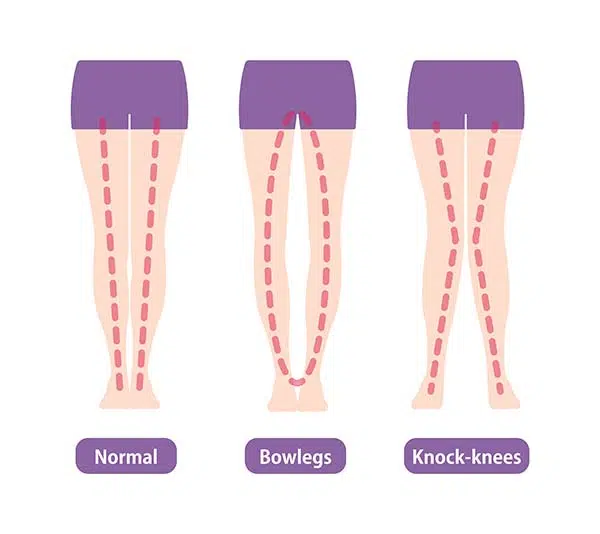
Knock knee, known medically as genu valgum, is a deformity in which the knees angle inward and may touch when the legs are straightened, while the ankles remain apart. Mild knock knee is common in young children and often resolves on its own as they grow. When it persists into adolescence or adulthood, or develops later in life, it can place uneven pressure on the knee joint and lead to pain and other problems.
Symptoms of Knock Knees
Knock knees can range from a mild cosmetic difference to a source of ongoing discomfort. Common signs include:
- A visible gap between the ankles when the knees are placed together
- Knee, hip, or ankle pain, especially during activity or after standing
- Reduced range of motion in the knees
- An altered gait or a noticeable limp
- Difficulty standing with the feet together
When genu valgum is significant, abnormal alignment can shift loading toward the outer, or lateral, compartment of the knee. Over time, this may contribute to pain, cartilage wear, and degenerative joint changes in some patients.
What Causes Knock Knees?
Knock knees can persist from childhood or develop after disease or injury alters lower-extremity alignment. Potential causes include metabolic bone conditions such as rickets, certain skeletal disorders, previous trauma or fracture involving the growth plate, and other conditions that affect normal bone development or alignment. In some adults, the deformity may also reflect residual alignment that persisted after growth. Identifying where the deformity originates and what caused it is an important part of treatment planning.
Can Knock Knees Be Corrected in Adults?
Yes. Significant knock knee deformity can be surgically corrected in adults. Because mature bones can no longer be redirected through growth-guidance techniques, structural correction generally requires an osteotomy when surgery is indicated. Not every adult with genu valgum needs surgery, however. The decision depends on the severity and location of the deformity, symptoms, joint health, functional limitations, and the patient’s goals.
How Is Knock Knee Deformity Evaluated?
A knock knee evaluation looks at more than how the legs appear when standing. Dr. Mahboubian examines gait, knee and hip motion, leg alignment, symptoms, prior injuries, and any difference between the two sides.
Full-length standing X-rays are especially important because they show the mechanical axis from the hip through the knee to the ankle. Measurements can help determine whether the valgus deformity originates primarily in the distal femur, proximal tibia, or more than one part of the leg. Joint-space narrowing or other signs of arthritis may also influence treatment recommendations.
Surgery may be considered when the deformity is significant and is associated with pain, abnormal joint loading, functional limitations, progressive joint changes, or substantial concerns about alignment. Mild genu valgum without symptoms may not require surgical correction.
Surgical Correction Options for Knock Knees
In adults who need surgical correction, an osteotomy is used to realign the bone at the level where the deformity originates. Genu valgum commonly comes from the distal femur, although the tibia or more than one level may contribute in some patients. Full-length standing X-rays help the surgeon measure the mechanical axis and determine where correction should be performed.
During an osteotomy, the bone is carefully divided, repositioned to improve alignment, and stabilized while it heals. Depending on the deformity and surgical plan, fixation may be internal or external.
Nonsurgical vs. Surgical Correction
| Approach | Best suited for | What it involves | Limitations |
| Nonsurgical | Mild or minimally symptomatic cases; growing children may have additional treatment options | Observation, bracing, orthotics, physical therapy, and weight management | May help symptoms or function but does not structurally correct mature bone alignment |
| Surgical (osteotomy) | Symptomatic or clinically significant deformity in skeletally mature patients | Realigning the bone near the knee and stabilizing it while it heals | Requires a recovery period and physical therapy |
What to Expect During and After Surgery
Knock knee osteotomy is performed under anesthesia in a hospital setting, often with a short stay so the care team can monitor early healing. Dr. Mahboubian makes an incision, realigns the bone to correct the deformity, and secures it with the device best suited to your anatomy. After surgery, most patients use a walking aid at first and gradually increase weight-bearing as the bone heals. Physical therapy is an important part of recovery and helps restore strength and range of motion.
Knock knee correction shares many principles with the other deformity-correction procedures the practice performs. You can explore the full range of procedures on the limb lengthening surgery guide, and learn about the related correction for outward-bowing legs on the bow leg correction page.
How Much Does Knock Knee Correction Surgery Cost?
The cost of knock knee correction surgery varies based on the severity of the deformity, whether one or both legs are treated, the surgical technique, and the facility and anesthesia fees involved. Because pricing is individualized, the most accurate estimate comes from a personal consultation.
For a detailed breakdown of what a surgical quote typically includes, see the practice’s height lengthening surgery cost page.
Insurance coverage depends on the reason for surgery. Purely cosmetic correction is usually considered elective and paid out of pocket, while correction that addresses a functional problem, significant pain, or a deformity from an underlying medical condition may be reviewed for coverage as medically necessary. Bring your records to your consultation so the team can help you understand your options.
Knock Knee Surgery FAQ
Can knock knees be corrected in adults?
Yes. Adults with significant genu valgum can undergo surgical correction with an osteotomy when clinically appropriate. Because growth plates are closed, bracing cannot permanently reshape mature bone alignment. Whether surgery is recommended depends on symptoms, deformity severity, mechanical alignment, joint health, overall health, and treatment goals.
Is knock knee surgery covered by insurance?
It depends on the reason for the procedure. When knock knee correction is performed to relieve pain or address a functional problem or an underlying medical condition, some insurers may review it as medically necessary. Correction done purely for cosmetic reasons is typically considered elective and is not usually covered. The practice can help verify your benefits.
How long is recovery from knock knee surgery?
Recovery varies by patient and by the technique used. Most people use a walking aid at first and gradually increase weight-bearing as the bone heals over the following weeks and months. Physical therapy is an important part of recovery and helps restore strength and range of motion. Dr. Mahboubian provides a personalized recovery timeline and follow-up schedule.
What is the surgery to correct knock knees called?
The most common procedure is an osteotomy. The surgeon makes a precise cut in the bone near the knee, realigns it to a straighter position, and stabilizes it with an internal or external device while the bone heals.
About Dr. Shahab Mahboubian
Dr. Shahab Mahboubian, D.O., MPH, is an orthopedic surgeon who completed fellowship training in limb lengthening and deformity correction at the Hospital for Special Surgery in New York, ranked the number one orthopedic hospital in the country by U.S. News & World Report. In addition to cosmetic limb lengthening, he treats knock knees, bow legs, leg-length discrepancies, and other lower-extremity deformities. He was the first orthopedic surgeon on the West Coast to perform cosmetic limb lengthening using the PRECICE nail system.
Schedule a Knock Knee Consultation
If knock knees are causing pain or affecting your daily life, a consultation is the best way to understand your options. Dr. Mahboubian will review your history, examine your alignment, and explain whether surgical correction is right for you.
Height Lengthening Institute · 191 S Buena Vista St #475, Burbank, CA 91505 · (818) 322-0126
Medical disclaimer : This page is for general educational purposes and is not a substitute for professional medical advice. Individual results and recovery times vary. Consult a qualified orthopedic surgeon to discuss your specific condition.