Limb Lengthening Recovery:
Month-by-Month Timeline
Recovering from cosmetic limb lengthening surgery is a journey that requires patience, discipline, and a clear understanding of the biological phases of bone growth.
While the surgery itself takes only a few hours, the process of “growing” and “hardening” new bone spans several months.
This month-by-month guide outlines what to expect as you transition from the operating room back to your daily life.
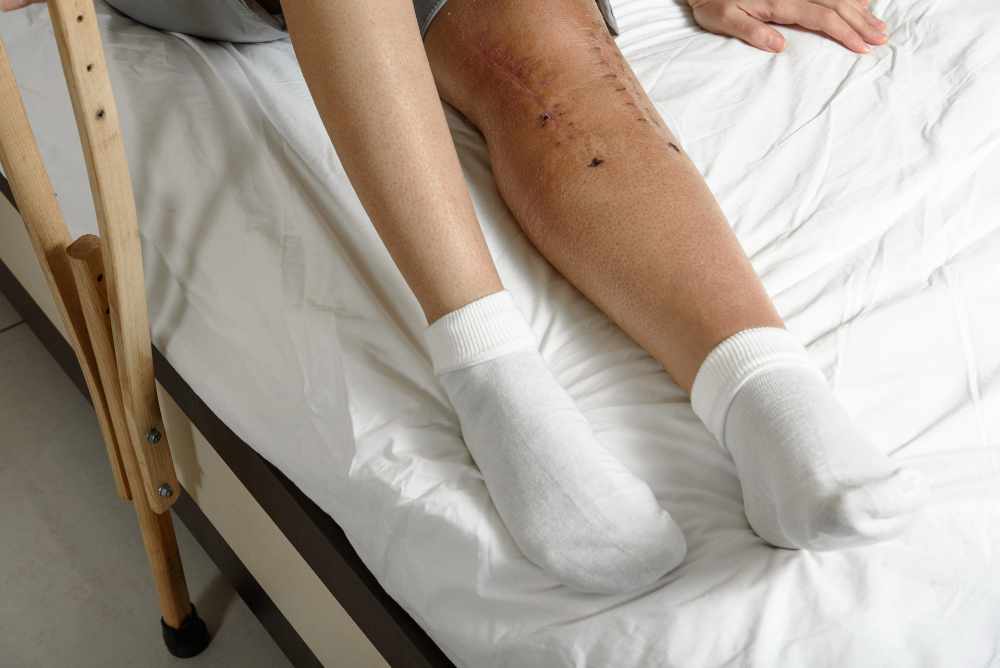
This month-by-month guide outlines what to expect as you transition from the operating room back to your daily life.
Month 1: The Surgical & Latency Phase
The first month is focused on healing from the initial procedure and preparing the bone for distraction.
- Hospital Stay: You will spend 2 to 3 days in the hospital for pain management and initial mobilization.
- The Latency Period: For the first 5 to 7 days after surgery, the bone is left to rest. This allows the initial “callus” (the beginning of a new bone) to form.
- Starting the Distraction: Toward the end of week one, you will begin using the External Remote Controller (ERC) to lengthen the PRECICE Nail System.
- Mobility: You will be using a walker or crutches. Most patients are on “partial weight-bearing” status.
- Physical Therapy: You will begin daily PT sessions to maintain joint flexibility and prevent muscle “tightness” as the lengthening begins.
Months 2–3: The Distraction
Phase (Active Growth)
This is the most intensive phase of the journey. You are actively gaining height at a rate of approximately 1mm per day.
- Height Gain: By the end of Month 3, you will have achieved approximately 6cm to 8cm of new height, depending on your surgical plan.
- The “Tightness” Factor: As the bone lengthens, the surrounding muscles, nerves, and tendons are stretched. This often results in a feeling of intense pressure or “growing pains.”
- Commitment to PT: Daily physical therapy is non-negotiable during this phase to prevent “ballerina foot” (equinus contracture) or knee stiffness.
- Sleep: Many patients find sleep difficult due to the stretching sensations; your surgeon may prescribe muscle relaxants to help.
Months 4–6: The Consolidation Phase
Once the desired height is reached, the “lengthening” stops, but the recovery continues. This phase is dedicated to bone mineralization (hardening).
- Bone Hardening: Your body turns the soft “regenerate” bone into solid, load-bearing bone.
- Increasing Weight-Bearing: As X-rays show the bone filling in, your surgeon will gradually allow you to put more weight on your legs.
- Ditching the Aids: Most patients transition from a walker to crutches, and eventually to walking independently toward the end of Month 6.
- Return to Work: Most desk-based professionals return to work during this window.
Months 7–12: The Strengthening Phase
The focus now shifts from bone growth to functional strength and gait retraining.
- Walking Normally: By Month 8 or 9, most patients are walking without a limp and have regained their full range of motion.
- Low-Impact Activity: You can typically resume activities like swimming, cycling, and light hiking.
- Muscle Recovery: You will continue exercises to rebuild the calf and thigh muscles that may have weakened during the distraction phase.
Year 1 and Beyond: Full Recovery & Rod Removal
- High-Impact Sports: Around the 10 to 12-month mark, most patients are cleared for running, jumping, and weightlifting.
- Rod Removal: Between 12 and 24 months post-op, you will return for a minor outpatient procedure to remove the internal hardware.
- The Final Result: Your bones are now just as strong (if not stronger) than they were before surgery. You have reached your permanent new stature.
Recovery Success Factors
To stay on track with this height lengthening surgery timeline, keep these three factors in mind:
- Nutrition: Prioritize calcium, Vitamin D, and high protein intake to fuel bone growth.
- No Smoking: Nicotine is the leading cause of “non-union” (bone failing to heal).
- Diligence: Never skip your daily stretches, even on days when the distraction feels comfortable.
Frequently Asked Questions (Recovery)
When can I walk without crutches after limb lengthening?
Most patients transition to walking without assistance 4 to 6 months after surgery, once the consolidation phase is well underway.
How soon can I return to a desk job?
You can typically return to remote work within 2 to 3 weeks, and in-office desk work within 2 to 3 months, depending on your mobility.
Is physical therapy required every day?
During the distraction phase (Months 1–3), daily stretching is required. Professional PT sessions are usually recommended 3 to 5 times per week.
When can I play sports like basketball or soccer again?
High-impact, contact sports are generally restricted for 9 to 12 months until the bone is fully consolidated and confirmed via X-ray.
How long do I stay in the hospital after surgery?
A typical hospital stay for cosmetic limb lengthening in the US is 2 to 3 days for monitoring and pain management.
Will I be in pain for the entire recovery?
No. The most uncomfortable period is the distraction phase (Months 2–3). Once lengthening stops, pain levels drop significantly.
Can I travel home during the recovery?
Many patients return home once the distraction phase is over (around Month 3), provided they have access to a local physical therapist.
Does the internal nail feel uncomfortable?
Most patients do not “feel” the nail inside the bone. It is completely internal and does not interfere with muscle movement.
When is the internal hardware removed?
The PRECICE rods are usually removed via a minor procedure 12 to 18 months after the initial surgery.
How do I know if my bone is healing correctly?
You will have follow-up X-rays every 1 to 2 weeks during the lengthening phase to monitor the “regenerate” bone growth.