
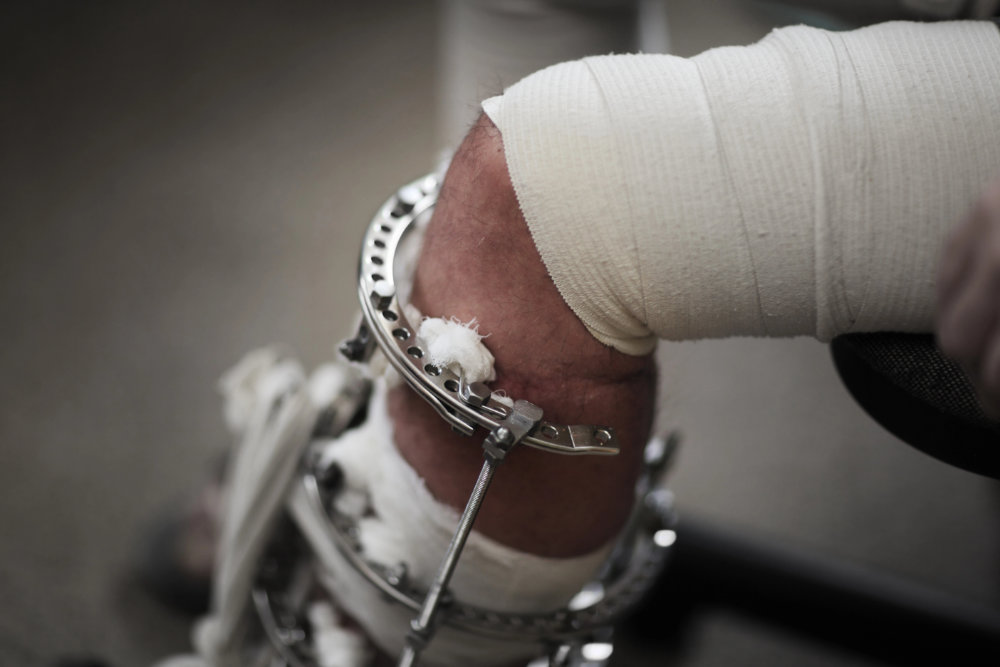
Limb lengthening systems of the past relied heavily on bulky, cumbersome, and painful external fixators that made the prospect of surgically adding to one’s height downright terrifying for many with short stature.
The obligatory metal cages, pins, and wires were passed through the skin and bone, anchoring the limb for the stretching process. The entire ordeal was extremely painful, even gruesome, not to mention public.
Today, thankfully, there are better options to successfully increase height thanks to advances in orthopedic surgery. Case in point, the innovation of the PRECICE nail system that has redefined what is possible in bone lengthening.
This sophisticated, internal device has largely replaced older, more invasive external fixator methods. The difference is greater precision, comfort, control, and recovery that’s faster than ever before.*
Read on to learn more about this intramedullary lengthening nail and how the ingenious interplay of titanium and magnets is changing lives through height lengthening surgery. You’ll learn what you need to know about the mechanism itself, recovery, and the unmatched patient experience this modern technology offers.
*The length of the recovery period from height lengthening surgery with PRECICE Max is highly dependent on the patient’s commitment to physical therapy and a healthy lifestyle.
What Is the PRECICE Nail?
The PRECICE nail is a state-of-the-art limb lengthening device that’s magnetically controlled with an external remote. A telescopic titanium rod is surgically placed within the bone marrow cavity of the femur or tibia and expands upon the commands sent by the remote control.
Developed with patient comfort and safety as top priorities, the PRECICE system was specifically engineered to reduce the chronic pain, extensive scarring, and high infection risk associated with traditional external frames.
PRECICE is an FDA-approved technology that has become the preferred choice for surgeons performing both reconstructive limb lengthening and cosmetic height enhancement. When people talk about the femur lengthening nail or tibia lengthening nail, they are usually talking about the PRECICE system.
The idea of internal lengthening isn’t entirely new, but early iterations lacked the safety and control of the PRECICE system. Previous internal nails used manual mechanisms or cumbersome external power sources.
The brilliance of the PRECICE system, developed by Globus Medical, is its reliance on magnet-controlled limb lengthening. This eliminates the need for an internal battery or complex wiring and makes the device simpler, improving its reliability and safety profile over the long term.
How Does the PRECICE System Work?
The PRECICE system’s height lengthening process is driven by the principles of bone regeneration, specifically distraction osteogenesis. Here’s the step-by-step rundown of how PRECICE harnesses this natural biological phenomenon:
1. Pre-Surgical Planning
Before making an incision, the orthopedic surgeon uses advanced imaging and measurement tools to plan the exact size of the nail, its precise position within the bone, and the exact amount of lengthening. This meticulous planning is the first step in successful internal nail lengthening.
2. Surgical Implantation
A skilled orthopedic surgeon makes small incisions and inserts the titanium nail into the marrow cavity—the canal that runs down the center of the bone. It is fixed securely at both the proximal and distal ends of the bone segment with specialized locking screws. The stability of this fixation is critical.
3. Osteotomy
Once the nail is firmly in place, the bone is surgically cut using a specialized technique called an osteotomy, a clean break that separates the bone into two segments. The cut is made carefully to minimize damage to the periosteum, the membrane covering the bone that contains cells responsible for bone healing.
4. The Magnetic Engine and the ERC
The internal telescopic rod surgically placed in the bone houses a sophisticated gear and motor mechanism. Outside of the body post-surgery, the patient uses a portable, handheld magnetic remote control (ERC), which stands for External Remote Controller. This powerful external magnet is held against the skin directly over the implanted nail.
5. Gradual Lengthening (Distraction Phase)
When activated, the ERC magnet rotates an internal magnet within the nail. The rotation’s mechanical energy slowly turns a gear that expands the internal telescopic rod, pushing the two cut bone segments apart.
6. New Bone Filling the Gap
The controlled, gradual separation that happens with the PRECICE nail creates a gap, typically 0.75 to 1mm per day. The body naturally senses this gap and the tension from the slow stretch, and immediately begins to generate new, soft bone tissue. The regenerated bone then fills the void.
Because of the process described above and the biological implications, you may see the PRECICE system referred to as a bone distraction osteogenesis device. It’s a perfect marriage of engineering and biology that lengthens in controlled increments that won’t disrupt the surrounding anatomy.
The adjustments are virtually painless during the process itself because they’re so small and precise. The snail’s pace of lengthening gives the body’s natural healing mechanisms enough time to keep up, regenerating new bone, blood vessels, muscles, and nerves simultaneously.
Advantages of the PRECICE Nail System
Comfort & Appearance
No External Frame or Hardware – No external structures means no gruesome metal cages. No unsightly pins are visible, and there’s a dramatically reduced risk of pin-site infection. You can wear normal clothing and be more discreet while you recover.
Significantly Lower Infection Rates – With no open pathways through the skin, the risk of serious bone infection is exceptionally low, contrasting sharply with the constant vigilance required with old-school external fixators.
Less Painful – Patients undergoing lengthening with the PRECICE nail typically report much less and more manageable pain. This makes the day-to-day life during treatment far more bearable and makes patients more likely to complete all their physical therapy the way they should.
Better Aesthetics – The incisions required for PRECICE are small for cleaner, less noticeable scars at the insertion points compared to the large scars associated with external frames.
Functional & Precision Benefits
More Accurate Lengthening and Alignment – The internal motor makes micro-adjustments with exceptional control over the rate of distraction. The telescopic rod keeps the bone segments internally stabilized and aligned throughout the entire process. Ultimately, this means more accuracy to the lengthening target and maintaining the proper anatomical axis.
Easier Mobility and Rehabilitation – Patients find it much simpler to move their joints and participate in the rigorous physical therapy program required for height lengthening without the obstruction of external metal. There’s often a quicker overall functional recovery as well when compared to older systems.
Personalized and Controlled Adjustment: The system gives the patient a tangible, controlled role in their healing, using the magnet-controlled limb lengthening remote control at home under strict medical guidance. The surgeon programs the daily lengthening target, but the patient performs the daily micro-adjustments in the comfort of their home.
Why Do Patients Report Less Pain with PRECICE?
The advantages above are so compelling that the internal nail vs external frame debate has more or less been settled in favor of the internal system, like PRECICE, for most elective and non-complex cases. Here’s why:
In external fixation for limb lengthening, pain comes from three main sources: the pin sites with multiple entry points, tethering of the muscles and tendons, and mechanical stress from the external frame.
PRECICE eliminates all of these issues. Since the entire device is sealed internally within the bone marrow cavity, there are no open wounds, no visible pins, and no external metal impeding muscle function. This simple difference removes the largest source of chronic, severe pin-site pain.
Accordingly, evidence consistently shows a strong preference for the PRECICE system. Studies of patients who have had experience with both external and internal devices, a super-rare but highly valuable perspective, show overwhelmingly lower pain scores and higher satisfaction with the internal nail.
There’s also some evidence that PRECICE expedites the bone hardening process, helping shave time off recovery.
Pain, while always subjective, is much more manageable with PRECICE. While patients still experience discomfort from the stretching of surrounding soft tissues, it typically responds well to standard prescribed analgesics. It’s a huge departure from the sharp, radiating, and often opioid-dependent pain associated with pin-site complications.
And because less pain means better movement and comfort, patients who use internal lengthening systems like PRECICE are better able to complete their physical therapy and often, recover more quickly.
Limb Lengthening Timeline for Recovery & Rehabilitation
Phase 1: Lengthening (Distraction) Phase
The distraction phase lasts as long as needed to achieve the desired amount of lengthening. For example, gaining two to three inches might take two to three months, since the rate is about 1mm per day for the active lengthening period.
Patients are restricted to partial weight bearing with PRECICE and usually need crutches or a walker. Full weight is typically avoided at this stage to focus the body’s energy on generating the new bone tissue and protecting the healing site.
Intense physical therapy sessions several times a week are critical to maintain mobility in the joints, especially the knee and ankle. PT exercises help prevent the surrounding muscles and tendons from getting too tight as the bone separates.
Phase 2: Consolidation (Healing) Phase
Now, this phase is a waiting game thanks to the body’s process of mineralization, typically taking two to three times longer than the lengthening phase. For three inches of lengthening, consolidation might take six to nine months.
The soft, new regenerated bone gradually hardens and mineralizes until it is structurally as strong as the original bone. Progress is monitored through frequent X-rays and regular clinic visits, where your orthopedic surgeon uses established radiographic scoring systems to grade bone healing.
As the bone hardens, the surgeon will gradually increase the amount of weight bearing with PRECICE allowed. This progression is carefully controlled to prevent fracture of the soft regenerated bone.
The time from surgery until you can walk normally with a stable bone can range from seven to 12 months per segment, depending heavily on the amount of lengthening achieved, the individual’s healing speed, and their dedication to physical therapy.
Potential Risks & Considerations
As the bone lengthens, the surrounding muscles, tendons, and nerves are stretched. This results in significant stiffness, making consistent physical therapy essential. Some degree of pain is inevitable and can be managed effectively with prescribed pain medication.
In some cases, the regenerated bone may not form quickly or strongly enough. If the gap is too large or the patient’s biology is slow, this may require intervention, such as internal bone grafting or specialized stimulation devices.
Although rare (given the system’s non-electronic, magnetic nature), the internal motor or telescopic mechanism can sometimes fail or stop lengthening. This may require a second surgery to fix or replace the nail. “
The stretching process can sometimes irritate or temporarily inflame nearby nerves. Patients may experience temporary tingling, numbness, or even weakness. Severe, permanent nerve damage is rare but remains a risk.
If physical therapy is neglected, joints can become overly tight (contractures) or move out of alignment (subluxation). That’s why collaboration between a qualified orthopedic surgeon and the physical therapy professional(s) is necessary for a proper recovery.
Who Is a Good Candidate?
People who are good candidates for PRECICE fall into two categories: medical and cosmetic. Different requirements are needed for each category of candidacy, as you can see below:
Medical and Reconstructive Candidates
- People of all ages with a significant limb length discrepancy resulting from congenital conditions, trauma, or previous surgeries.
- Patients who need to correct bone deformities such as severe bow legs or knock knees as part of a larger limb salvage or correction plan.
Cosmetic Candidates
- Healthy adults who have reached skeletal maturity and have a strong, realistic desire to increase their height.
- Candidates who demonstrate psychological readiness, who understand the demanding nature of the recovery, the limb lengthening inches possible (usually up to 3 inches per segment), and the intense commitment required for successful rehabilitation.
- Non-smokers with healthy bones who are generally in good overall physical and psychological health.
Alternatives to PRECICE: Comparing Limb Lengthening Systems
| System | Mechanism | Key Feature | Weight Bearing | Pros/ Cons | Cost |
| PRECICE 2 Nail | Internal, Magnetic | Controlled, precise lengthening | Partial -Weight Bearing | Best aesthetics, good comfort | High |
| Fitbone Nail | Internal, motor | Enhanced stability and strength | Partial/Non- Weight Bearing (Early) | Excellent aesthetics, highest comfort; limited lengthening | Highest (not FDA approved in USA) |
| External Fixators (e.g., Ilizarov) | External Frame/Rods | Versatile correction of complex deformity | Partial Weight Bearing (In Frame) | Poor aesthetics, high infection risk, high pain; longest recovery period | Moderate |
| Lengthening Over Nail (LON) | Hybrid Frame/Nail | Combines temporary frame for stability with internal nail | Full Weight Bearing (Post-Frame) | Mixed aesthetics, temporary external hardware; longer recovery period | Moderate-High |
What to Expect During the Procedure & Recovery
Pre-surgical evaluation and mapping will include detailed X-rays, CT scans, and sometimes an MRI to map the bone and soft tissues precisely. Orthopedic surgeons use this data to calculate the exact degree of correction required.
On the day of surgery, the procedure takes several hours under general anesthesia for the implantation of the nail and the precision osteotomy. Patients usually remain in the hospital for a few days for specialized pain management and early, gentle physical therapy.
From there, it’s on to the recovery period. Here are the recovery milestones you can expect:
- Start of Lengthening (Day 5-7): The ERC is programmed, and daily, micro-precise lengthening sessions begin. Height gain is gradual but continuous.
- End of Lengthening (2-3 Months): The desired length has been achieved, the ERC is no longer needed, and the consolidation phase begins.
- Removal of Crutches (6-9 Months): The surgeon monitors bone strength. Once the regenerated bone shows corticalization, the patient is allowed to progressively increase weight bearing, transitioning from crutches to a cane, and then to unassisted walking.
- Nail Removal (1-2 Years): Once the bone is fully healed and stable, usually 12-24 months after the initial surgery, a minor outpatient surgery is performed to remove the nail.
Long-Term Outcomes
Cosmetic height surgery results are measured not just by the inches gained, but by the functional recovery that gives people their life back.
Once the nail is removed and the bone has completely consolidated and remodeled, patients are typically cleared to resume running and high-impact sports. The new bone, once healed, is indistinguishable in strength from the original bone.
The unprecedented precision of the PRECICE technology helps surgeons meet lengthening goals with exceptional accuracy, often within a millimeter.
With dedicated physical therapy, the surrounding soft tissues adapt, leading to stable, natural limb alignment and a restoration of a normal, symmetrical gait.
Improved body confidence, better self-image, and higher quality of life are consistently reported by patients who successfully complete the process.
FAQs: Common Patient Questions
Is the PRECICE limb lengthening surgery painful?
Yes, but the pain is significantly less compared with external fixators traditionally used for limb lengthening surgery in the past. Pain after PRECICE is akin to a deep, stretching pain from the soft tissues, which is manageable with a robust pain management regimen, particularly during the lengthening phase.
How much height can I safely gain with the PRECICE system?
Most surgeons recommend a limit of 3 inches (approximately 8 cm) in the femur or 2 inches (5 cm) in the tibia per segment in a single procedure to avoid excessive risk of nerve damage and muscle contracture.
How long does the entire recovery process take?
The full process from surgery to walking unassisted usually takes 6-7 months per segment. Full bone remodeling and clearance for high-impact activities takes longer, typically 12-18 months.
When can I walk or return to normal activities after surgery?
You will be partial-weight bearing for the first 3-6 months. Full weight-bearing begins gradually during the consolidation phase, usually 6-9 months post-surgery, once X-rays confirm sufficient bone mineralization.
Are there any risks of nerve or muscle damage?
The risk of temporary nerve irritation is present due to stretching, leading to numbness or tingling. Severe, permanent damage is rare because the lengthening from the magnets is slow, giving tissues time to adapt.
Will the PRECICE nail need to be removed later?
The nail is recommended to be removed; it’s a temporary device and gets taken out in a minor surgery once the bone is completely healed, usually 1 to 2 years after the initial procedure.
How does the magnetic lengthening remote work?
The External Remote Controller (ERC) uses powerful, timed magnetic fields to engage the internal magnet and motor within the nail, causing it to mechanically extend a fraction of a millimeter at a time. It is a more precise, patient-friendly way to control the distraction.
Is the PRECICE system suitable for both legs at once?
Yes, simultaneous bilateral lengthening (both femurs or both tibias) is common in cosmetic cases. It is an intensive commitment but allows the patient to complete the entire process in one recovery timeline.
What happens if the nail stops lengthening or needs adjustment?
If the nail stops lengthening due to a rare mechanical failure, a revision surgery may be necessary. If the bone healing rate needs adjustment, the orthopedic surgeon will simply change the patient’s daily lengthening prescription on the ERC.
What is the PRECICE nail cost?
Investment in the PRECICE nail ranges from $80,000 to over $175,000 for the entire procedure, including hospital fees, nail hardware, surgeon fees, and physical therapy. The costs are higher than traditional methods because of the complexity and advanced hardware.
Is Height Lengthening with PRECICE Nail Right for You or Your Loved One?
The PRECICE nail moves the complex mechanics of lengthening from outside to inside the body. The system has transformed a notoriously difficult procedure into one that is more controlled, precise, and infinitely more comfortable for the patient.
Height lengthening with PRECICE can do more than add a few extra inches of height or correct limb length; it can give patients a newfound sense of confidence and freedom of movement. We’ve seen it dozens of times here at Height Lengthening in Los Angeles.
If you’re interested in limb lengthening either for reconstruction or cosmetic height surgery, the first step is to get in front of an experienced orthopedic specialist:
For expert limb lengthening in Los Angeles, schedule a consultation today with Dr. Shahab Mahboubian, D.O., MPH, and begin your journey.